


Every website needs HTTPS. It’s not just about security — it’s about trust, compliance, and showing up in search results. At the heart of that is your SSL certificate. But with free options widely available, and paid ones promising more features, how do you know which path to take?
This guide cuts through the noise. We’re comparing free and paid SSL certificates head to head across the key factors that actually matter: cost, validation process, trust chain, support, warranty, and real-world use cases. You’ll learn where free certificates like Let’s Encrypt shine — and where they fall short. We’ll also break down what you’re really paying for with commercial SSL, and whether it’s worth it for your situation. From small blogs to business-critical applications, we’ll help you decide the best SSL certificate for your needs — without overselling or oversimplifying.
What Is an SSL Certificate?
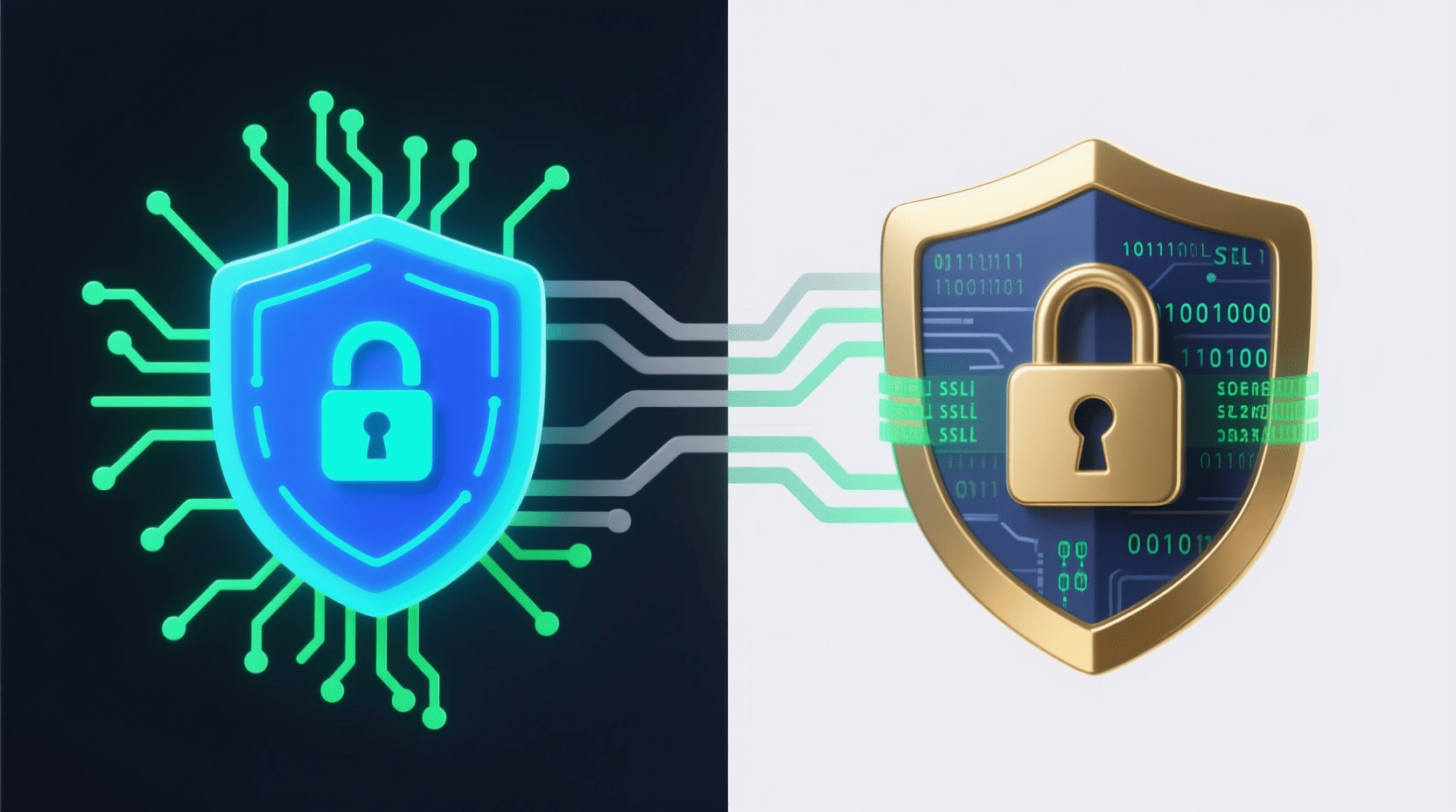
An SSL certificate is a small digital file that enables secure communication between a user’s browser and your web server. When someone visits your site, this certificate kicks off a process called encryption — scrambling the data so only the intended recipient can read it. That’s what makes HTTPS possible.
Think of it like sealing a letter in an envelope before sending it through the mail, instead of writing the message on a postcard. Without SSL, everything — login credentials, form data, payment details — travels in plain text, exposed to interception. With it, that data is protected. Technically, most “SSL” certificates today use TLS (Transport Layer Security), the more modern and secure successor to the older SSL protocols. But the term “SSL” stuck, so you’ll still hear it used everywhere.
Beyond encryption, SSL certificates also verify your site’s identity. Browsers check the certificate to confirm they’re talking to the real yourbusiness.com, not an imposter. That verification builds trust — users see the padlock icon, feel confident, and keep browsing. In short: no SSL certificate, no HTTPS. No HTTPS, no security. And in today’s web, no credibility either.
Why Are SSL Certificates Important?
In today’s digital world, SSL certificates aren’t just a technical detail — they’re a necessity. Any website that collects information, from login credentials to email addresses, is responsible for protecting it. Without SSL, data travels in plain text across networks, making it easy for attackers to intercept through public Wi-Fi, malicious proxies, or other cyber threats. That’s where encryption comes in. An SSL certificate ensures that the connection between the user and your server is secure, shielding sensitive data from prying eyes. This protection is critical for preventing man-in-the-middle attacks, where a third party eavesdrops or even alters the communication without either side knowing.
Beyond security, SSL builds trust. Visitors look for the padlock icon and “https://” in the address bar before entering personal information. For e-commerce sites, membership platforms, or any service requiring logins, that visual cue can mean the difference between a completed transaction and an abandoned cart. Search engines reinforce this, too — Google marks non-HTTPS sites as “Not Secure,” which can scare users away. In short, SSL isn’t just about compliance. It’s about protecting your users, defending against real threats, and showing that your site is safe to use.
What Do Free & Paid SSL Certificates Include?
At first glance, free and paid SSL certificates look similar — they both enable HTTPS and provide encryption. But what’s included behind the scenes varies significantly. From validation methods to support and warranty, the differences affect security, usability, and long-term maintenance. Below, we break down the key aspects of each type so you can see exactly what you’re getting — and what you might be missing.
Authority (Issuing Authority)
Both free and paid SSL certificates come from trusted Certificate Authorities (CAs) recognized by major browsers like Chrome, Firefox, and Safari. A certificate’s trustworthiness starts with the CA that issues it.
Free certificates are typically issued by Let’s Encrypt, a non-profit CA backed by the Internet Security Research Group. It’s trusted by virtually all modern browsers and devices. Paid certificates come from established commercial CAs like DigiCert, Sectigo, or GlobalSign — companies with decades of experience and deep integration into enterprise environments. While both types provide the same basic browser trust when properly configured, commercial CAs often have broader root certificate distribution, especially in older or niche systems (like some government or corporate networks). They also undergo regular audits and comply with strict industry standards, which can matter for regulated industries.
In practice, for most websites, Let’s Encrypt is just as trustworthy as any paid CA. But the history, reach, and compliance infrastructure of commercial CAs can make a difference in complex or high-assurance environments.
Validation Type
Not all SSL certificates verify identity the same way. The level of validation tells users — and browsers — how much the Certificate Authority (CA) checked before issuing the certificate.
Free SSL certificates, like those from Let’s Encrypt, only support Domain Validation (DV). This means the CA confirms you control the domain — usually by adding a DNS record or placing a file on the server. It’s fast and automated, but it doesn’t verify who you are. Anyone with access to the domain can get the certificate, regardless of whether they’re a solo blogger or a fake storefront.
Paid certificates go further. They offer two higher levels:
- Organization Validation (OV). The CA checks your business name, location, and legal existence. This adds a layer of trust, showing visitors that a real, verified organization owns the site.
- Extended Validation (EV). The most rigorous level. It involves a detailed review of legal documents, business registration, and operational status. In the past, EV certificates turned the address bar green and displayed the company name in desktop browsers — now, with modern UI changes, that visual cue is less prominent, but the validation still matters for compliance and internal trust.
OV and EV certificates are especially valuable for financial services, healthcare, and enterprise platforms where users expect strong identity assurance. For most small websites, DV is sufficient. But if you’re running a business where trust is part of the brand, paid validation levels offer real credibility.
Site/Trust Seal
A trust seal — also called a site seal or security badge — is a small, clickable logo you can display on your website, usually near login forms or checkout buttons. It’s a visual signal that your site is secured by a trusted SSL certificate.
Paid SSL certificates often include a dynamic trust seal that shows real-time validation details when clicked: business name, location, and the fact that the connection is encrypted. This transparency builds customer confidence, especially on e-commerce sites where users hesitate to enter payment information. Studies have shown these badges can improve conversion rates by reducing cart abandonment. Shoppers see the seal and feel reassured that they’re dealing with a legitimate business.
Warranty
One of the clear advantages of paid SSL certificates is the warranty that comes with them. This is a financial guarantee provided by the Certificate Authority in the rare event of a breach caused by a certificate error, such as misissuance or a flaw in validation. If a user suffers losses because the CA issued a certificate to the wrong party and that leads to a security incident, the warranty may cover those damages. It’s not insurance for your business, but it shows the CA stands behind its validation process.
Free SSL certificates, including those from Let’s Encrypt, offer no warranty. That’s not a flaw — it reflects their model: free, automated, and scalable. But for businesses handling sensitive transactions, especially in finance or healthcare, the warranty adds a layer of accountability and reassurance. It’s not about expecting a payout. It’s about knowing the provider has skin in the game.
Support
When things go wrong with your SSL certificate — whether it’s failing to renew, not installing correctly, or breaking your site — having someone to call matters. Paid SSL providers offer dedicated technical support, usually available 24/7 via phone, email, or live chat. Their teams can help with configuration, troubleshoot compatibility issues, and guide you through complex setups like multi-domain or wildcard certificates. This level of service is especially valuable for non-technical users or teams managing mission-critical websites where downtime means lost revenue or trust.
Free certificates, like those from Let’s Encrypt, rely entirely on community support — forums, documentation, and GitHub issues. There’s no direct line to a support engineer. While the community is active and knowledgeable, getting help takes time and technical effort. If you have in-house expertise and automation in place, that’s fine. But if you need fast, reliable answers when under pressure, paid support isn’t just convenient — it’s a real operational advantage.
Free Let's Encrypt SSL Certificates
Let’s Encrypt revolutionized web security by making SSL certificates free, automated, and accessible to everyone. Backed by the non-profit Internet Security Research Group, it’s now the most widely used Certificate Authority on the web. The process is simple: you use an ACME client (like Certbot) to prove domain ownership, and within minutes, you get a valid, browser-trusted DV certificate. Renewals are just as smooth — automated every 90 days, often without any manual intervention. This automation makes Let’s Encrypt ideal for developers, DevOps teams, and anyone running websites at scale.
It supports standard, wildcard, and multi-domain certificates, all at no cost. Because it’s open-source and well-documented, integration with hosting platforms, CDNs, and control panels is widespread. But there are limits. Let’s Encrypt only offers Domain Validation — no OV or EV options. There’s no warranty, no trust seal, and no phone support. If something breaks, you’re relying on logs, scripts, and community help. For most websites — blogs, portfolios, small business sites, even many SaaS platforms — Let’s Encrypt is more than enough. It delivers strong encryption and solid trust. But if you need identity assurance, support, or enterprise features, you’ll need to look beyond it.
Free vs Paid SSL Certificates: Pros and Cons
Both free and paid SSL certificates provide the same core benefit: strong encryption and HTTPS in the browser. Technically, a free certificate from Let’s Encrypt secures your traffic just as well as most paid ones. But the differences lie beyond encryption. Validation levels, customer support, warranty, trust seals, and ease of management vary significantly. Free options excel in automation and cost — perfect for developers and small sites. Paid certificates offer identity verification, liability protection, and dedicated support, making them better suited for businesses where trust and reliability are critical. The right choice isn’t about which is “better” overall — it’s about which fits your needs. Let’s break it down.
Pros of Free Certificates
Free SSL certificates remove the biggest barrier to HTTPS: cost. With providers like Let’s Encrypt, anyone can secure their website at zero expense — no credit card, no billing cycle.
They’re also incredibly easy to set up. Using automation tools like Certbot or built-in hosting integrations, you can issue and install a certificate in minutes. Renewals are handled automatically every 90 days, reducing long-term maintenance.
The encryption strength is identical to most paid DV certificates, so your data protection is solid. They’re trusted by all major browsers and widely supported across platforms.
For personal sites, blogs, small business pages, or development environments, free certificates are more than enough. Let’s Encrypt alone has helped millions of websites go HTTPS, proving that security shouldn’t come with a price tag. If you need basic encryption and can manage automation, free SSL is a smart, practical choice.
Cons of Free Certificates
Free SSL certificates come with real limitations. They offer no warranty — meaning no financial protection if something goes wrong due to a certificate issue. There’s also no dedicated support; if you hit a problem, you’re limited to community forums and documentation.
They only support Domain Validation (DV), so there’s no verification of your business identity. To users, your site may look secure, but nothing confirms you’re a legitimate company — something attackers can exploit with phishing sites that also use free certs.
Another downside: short validity. Let’s Encrypt certificates expire every 90 days. While automation helps, any failure in renewal scripts can lead to sudden outages — something high-traffic or business-critical sites can’t afford. Finally, free certificates don’t include trust seals or branding features that boost customer confidence during checkout. For e-commerce, enterprise services, or any site where trust conversions, these missing pieces can be a real disadvantage.
Pros of Paid Certificates
Paid SSL certificates deliver more than encryption — they provide trust, accountability, and peace of mind. With Organization Validation (OV) and Extended Validation (EV), they verify your business identity, showing users that your site is backed by a real, legally recognized company. They come with financial warranties offering protection in the rare case of a certificate-related breach. That warranty signals the CA stands behind its validation process. You also get a trust seal: a clickable badge that displays your verified business details, reinforcing credibility, especially during checkout or login flows.
Support is another major advantage. Phone, email, and chat assistance help resolve issues fast — critical for non-technical teams or time-sensitive deployments.
Certificates typically last one to two years, reducing renewal frequency. And for enterprises, features like multi-domain support, seamless integration, and centralized management make paid options easier to scale. If you’re running a business where security and trust are part of the brand, paid SSL is a smart investment.
Cons of Paid Certificates
Paid SSL certificates cost money — anywhere from $10 to hundreds of dollars per year, depending on the provider and validation level. For small websites, blogs, or personal projects, that cost can be hard to justify when free alternatives offer the same encryption.
The validation process for OV and EV certificates also takes more time and effort. You’ll need to submit business documents, verify legal ownership, and go through manual checks — steps that can take hours or days, not minutes. Installation can be less automated, especially if you’re not using a supported platform. And for developers used to scripting Let’s Encrypt into CI/CD pipelines, the process may feel clunky.
Most importantly, many paid features — like warranties, trust seals, and extended validation — don’t matter to every site. If you’re not handling sensitive transactions or building enterprise trust, a paid certificate might be overkill. You’re not getting better encryption. You’re paying for identity assurance, support, and peace of mind. That’s valuable — but only if you actually need it.
Comparing Free vs Paid SSL Certificates
| Feature | Free SSL | Paid SSL |
|---|---|---|
| Cost | Free | $10 – $1,000+ per year, depending on type and provider |
| Validation Levels | Domain Validation (DV) only | DV, Organization Validation (OV), and Extended Validation (EV) |
| Certificate Authority | Let’s Encrypt (non-profit) | DigiCert, Sectigo, GlobalSign, and others (commercial) |
| Support | Community forums, documentation | 24/7 phone, email, and chat support |
| Validity Period | 90 days (automated renewal required) | 1–2 years (fewer renewals needed) |
| Business Identity Verification | No – only domain ownership | Yes – OV and EV include legal and organizational checks |
| Use Cases | Blogs, personal sites, dev environments, small business sites with basic security needs | E-commerce, financial services, enterprise apps, login portals, any site where trust and compliance matter |
This table highlights a simple truth: both free and paid certificates secure your traffic equally well. The real difference is in trust, support, and features — not encryption. Your choice should depend on who you are, what your site does, and how much risk you can afford.
When Should You Choose Free SSL vs. Paid SSL?
Choosing between free and paid SSL comes down to one question: What does your website need to do, and who depends on it? If you’re running a personal blog, a portfolio, a small business site with no logins or payments, or a development/staging environment, free SSL is the right call. Let’s Encrypt gives you full HTTPS encryption, browser trust, and automated renewals — everything you need, at no cost. For most small sites, there’s no security gap. The padlock appears, search engines are happy, and visitors aren’t at risk. You’re getting enterprise-grade encryption without the price tag.
But if your site handles logins, collects customer data, processes payments, or represents a brand where trust credibility, paid SSL makes sense. The added validation (OV or EV) proves you’re a real business — not a phishing clone. The warranty, trust seal, and 24/7 support aren’t just perks; they reduce risk and build confidence. For e-commerce stores, SaaS platforms, financial services, or internal enterprise systems, these features matter.
Also consider your team. If you don’t have in-house technical staff to manage automation and troubleshoot renewals, the support and longer validity of paid certificates can prevent costly outages. And if you're in a regulated industry (like healthcare or finance), compliance may require verified business identity or audit-ready documentation — something free certificates don’t provide. Bottom line:
- Go free when you need basic encryption and automation.
- Go paid when you need trust, identity assurance, support, or compliance.
The best choice isn’t about cost alone. It’s about matching your certificate to your website’s real-world role.
Where can I buy a paid SSL certificate?
You can purchase a paid SSL certificate directly from your hosting provider or through a trusted service like VPS.one. At VPS.one, you’ll find a range of reliable, browser-trusted certificates at competitive prices, including AlphaSSL and GoGetSSL Wildcard options for broader coverage. The ordering process takes less than a minute through your personal account, and professional installation is available for just $2. Whether you need Domain Validation for a simple site or more advanced validation for a business, VPS.one offers a straightforward way to secure your website with a trusted SSL certificate.
Free vs Paid SSL FAQ
Are free SSL certificates safe to use?
Yes, free SSL certificates are safe. They use the same encryption standards (256-bit) as most paid certificates and are trusted by all major browsers. Let’s Encrypt, for example, follows strict security practices and is audited regularly. The risk isn’t in the certificate itself, but in how it’s managed — short 90-day lifespans mean automation is critical. If renewal fails, your site becomes insecure. So while the certificate is safe, operational discipline is required to keep it that way.
Do free SSL certificates hurt SEO?
No, free SSL certificates do not hurt SEO. Google treats HTTPS as HTTPS — regardless of whether it’s from Let’s Encrypt or DigiCert. As long as your site uses a valid, properly installed certificate, you get the same ranking boost and “Secure” label in Chrome. The misconception comes from confusing encryption with trust. SEO only cares about encryption. So for blogs, small sites, or startups, free SSL is perfectly fine for maintaining or improving search visibility.
Can I switch from a free to a paid SSL certificate later?
Yes, you can switch anytime. Many businesses start with Let’s Encrypt and upgrade to a paid certificate when they need OV/EV validation, a warranty, or a trust seal. The process is straightforward: purchase the paid certificate, complete validation, install it, and remove the old one. Your HTTPS security remains intact during the transition. This flexibility makes free SSL a great starting point for growing websites that may later require higher levels of trust and support.
Is the encryption really the same for free and paid certificates?
Yes, the encryption strength is identical. Both free and paid SSL certificates typically use 256-bit encryption — the same cryptographic standard used by banks and governments. The difference isn’t in how data is protected, but in who is verified. A paid certificate confirms your business identity; a free one only confirms domain ownership. For securing data in transit, both are equally effective. The choice depends on whether you need to prove who you are, not just that the connection is secure.
Why do some companies still use paid SSL if free options exist?
Because trust goes beyond encryption. Enterprises, financial institutions, and e-commerce sites use paid SSL to benefit from Organization and Extended Validation, warranties, customer support, and trust seals — features that build user confidence and meet compliance requirements. While free certificates secure the connection, paid ones provide accountability, identity assurance, and peace of mind. For high-stakes websites, these extras justify the cost, even if the underlying encryption is the same.